




Seven years I haven’t left China.
Since 2018 I have lived and worked here, with my family absorbing everything happening around us. The winter of 2024 welcomed me in a completely different light: an invitation to become a member of the jury of an international conducting competition in Budapest. I remembered myself young, dreaming of such a competition, and now I found myself in the jury box—proud and with a shy hope for a fresh perspective on old roads. It is a great honor for both my heart and my memory.
The journey began not with a plane, but with the rhythm of a train—from Zhangjiajie to Guangzhou on a high-speed service. A route well known to me: the office here is the Ukrainian consulate, with which I have been closely collaborating for seven years, working with cultural and diplomatic forces. Since the start of the war in Ukraine, our cooperation has transformed—it has grown deeper, as if the edges between two worlds blur in the tempo of trains and negotiations. Ukrainians, wherever they are, continue to fight for their country by any means. And I believed this—even when unpredictable reality raged around.
Guangzhou greeted me with the logic of infrastructure: everything thought through and clear. I arrive at the station and head straight to the metro—only 5 yuan (less than $1) to the airport. Taxi maybe, “why not”—but the saving here felt like gratitude to the city’s reasonable organization.
Terminal 1 Guangzhou, and my route—Guangzhou-Shanghai-Budapest, with small openings and disappointments along the way.
I checked my suitcase in immediately, and the claim tag was for receiving baggage in Budapest—convenience that lifts the burden of excess. At the airport I booked a lunch by a recipe from a favorite restaurant: noodles, two halves of an egg, fried dumplings, and tea—72 yuan. A bit more expensive than in Zhangjiajie, but still tolerable. Fueled by warmth and appetite, I headed to the gate to complete all formalities before the flight and perhaps stop by duty-free.
We waited for MU5354 for about two hours. The delay was caused by a giant thunderstorm, the tail of which could be seen from my window when my plane took off for Shanghai. We reached Shanghai almost imperceptibly. I wrote a text, observing the people around me. Seven years in Chinese society made me a Robinson not of fearless adventuring, but of a person who learned to survive in conversations of long waiting. Not because Chinese society was wild, but because it had become something else—complex, colorful, and sometimes coolly philosophical. Yet that society made me attentive to communication. A paradox.
Disappointment approached not at the right place but at the context. While waiting for the next flight, delayed because of us and others, I felt an emerging reality: people around me of different nationalities, different histories, and different aims. At passport control, an officer asked—have you not left China for seven years? I smiled and answered in pristine Mandarin: yes. He smiled back and carefully stamped my new passport. “Wishing you a speedy return home,” said the Chinese customs officer, handing me my passport with a note: 14.10.2025 depart.
A clean and quick customs clearance—and I’m in the hangar-like corridors, where pockets feel tight but thoughts are free. The evening after the rain left patterns of light in the sky, and in my head a stubborn thought about the true value of life.
The moment overwhelmed me.
We survived the pandemic and the beginning of the war in Ukraine, the loss of a son, and all this time lived among friends who asked for nothing in return—just lived and helped strangers feel at home.
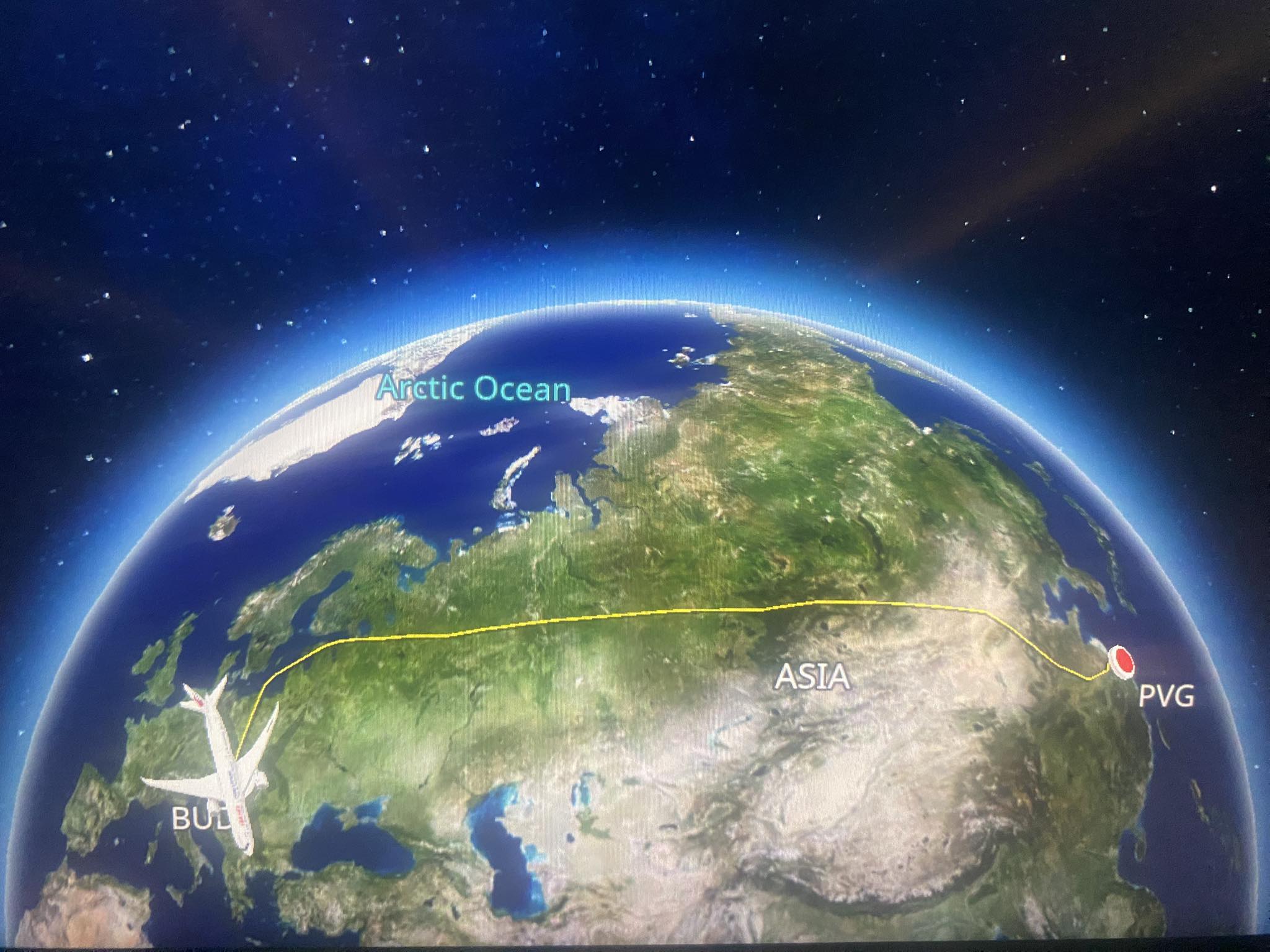
The flutter of thoughts about contrasts between the Chinese and European environments briefly sharpened here in the plane. Our route traced cities of my past. Ghosts of old childhood and youth addresses surfaced like city lights: Tomsk—first grade, Novosibirsk—my brother studies Brone’s violin in the conservatory, Lipetsk, Barnaul, Meas—memory routes that flickered in the flight path toward Saint Petersburg (Leningrad), in a gentle turn over the Baltic coast toward Budapest.
We landed from the north, the morning on the left, the sky inspiring.
Catharsis, the roar of the gear, the landing.
In Budapest airport we were met by an employee—vibrant and humorous—who literally directed the flow of passengers, and the mood became warmer despite early morning and time difference. But the first person a traveler meets in a foreign country remains the border guards. Female border officers, attentive and exacting, checked faces and passports, forming the arrival line. One official noticed that a Chinese woman in line had photographed the process; she slyly but firmly took the phone and pointed to the need to delete the photo. The thought that law and order here are not empty words rang with a тревожной нотой (note of anxiety).
The customs area—there are other eagles, keenly watching. I answered questions: where from and what I do. When I said I’m a Ukrainian conductor working in China, the customs officer’s gaze softened—he looked like a colleague who understands my dual identity. No extra checks—and we’re in the city of a new day.
The drive to the hotel turned into traffic and urgency for the meeting—my contact had known my name in advance and accompanied me to the taxi. Ahead lay three hours of waiting for a room—and no escaping the reality that in this European city everything is different. We sat down for breakfast—the first European breakfast in seven years. It was magnificent—coffee, bread, cheese, eggs, and something familiar, yet new in the context of my journey.
I felt that in seven years in a foreign country not only habits form, but new views of myself and the world around me as well. Moments of nostalgia, disappointment, and gratitude intertwined like notes in one symphony. I remembered a friend with whom I once dreamed bigger—for a competition, for an opportunity to be heard. Now I’m in the role of someone who can listen and evaluate—the jury members who themselves seek the breath of music in the soul of every performer.
And now the finale resonates in a phrase that sounds like “To be continued.” An open ending—and this is not the end of the story, but the beginning of a new scene. Before me are the contrasts between the Chinese stage and the European stage, between what we were and what we can become. I am a person who loves music enough to understand how it connects cities, people, and eras.
To be continued.
Seven years I haven’t left China.
Since 2018 I have lived and worked here, with my family absorbing everything around us. The winter of 2024 welcomed me in a completely different light: the proposal to join the jury of an international conducting competition in Budapest. I remembered myself young, dreaming of such a competition, and now I’m seated in the jury box—with pride and a shy hope for a new perspective on old roads. It is a great honor for both heart and memory.
The journey began not with a plane, but with the rhythm of a train—from Zhangjiajie to Guangzhou on a high-speed train. A familiar route: here the office is the Ukrainian consulate, with which I have been closely collaborating for seven years, where I work with cultural and diplomatic forces. Since the start of the war in Ukraine, our cooperation has transformed—it has grown deeper, as if the edges between two worlds blur in the tempo of trains and negotiations. Ukrainians, wherever they are, continue to fight for their country by any means. And I believed this—even when unpredictable reality raged around.
Guangzhou greeted me with the logic of infrastructure: everything planned and clear. I arrive at the station and head straight to the metro—only 5 yuan (less than $1) to the airport. A taxi, perhaps, “why not”—but the saving here felt like gratitude to the city’s rational organization.
Terminal 1 Guangzhou, and my route—Guangzhou-Shanghai-Budapest, with small openings and disappointments along the way.
I checked my suitcase in immediately, and the claim tag was for receiving baggage already in Budapest—convenience that lifts the burden of extra weight. At the airport I ordered lunch by a recipe from a beloved restaurant: noodles, two halves of an egg, fried dumplings, and tea—72 yuan. A bit more expensive than in Zhangjiajie, but still tolerable. Fueled by warmth and appetite, I headed to the gate to complete all formalities before the flight and, perhaps, to peek at duty-free.
We waited for MU5354 for about two hours. The delay was caused by a gigantic thunderstorm, the tail of which could be seen from my window when my plane took off for Shanghai. We reached Shanghai almost imperceptibly. I wrote a text, watching the people around me. Seven years of Chinese society made me a Robinson not of a fearless hunter of adventures, but a person who learned to survive in conversations of long waiting. Not because Chinese society was wild, but because it became something else—complex, multicolored, and sometimes coldly philosophical. But that society made me perceptive to communication. A paradox.
Disappointment approached not at the right place, but in the context. While waiting for the next flight, delayed because of us and others, I felt an emerging reality: people around me of different nationalities, different histories, and different purposes. At passport control, an officer asked—have you not left China for seven years? I smiled and answered in impeccable Mandarin: yes. He smiled back and stamped my passport carefully. “Wishing you a swift return home,” said the Chinese customs officer, handing me my passport with a note: 14.10.2025 depart.
A clean and fast customs inspection—and I’m in the hangar-like corridors, where pockets are sometimes tight but thoughts remain free. The evening after the rain left patterns of light in the sky, and in my head—a persistent thought about the true value of life.
It overwhelmed me.
We survived the pandemic and the beginning of the war in Ukraine, the loss of a son, and all this time lived among friends who asked for nothing in return—just lived and helped foreigners feel at home.
The thought of contrasts between the Chinese and European environments, which fluttered briefly, became especially vivid here on the plane. Our route passed through cities of my past. Ghosts of old addresses from childhood and youth surfaced like city lights: Tomsk—first grade, Novosibirsk—my brother studies Brone’s violin in the conservatory, Lipetsk, Barnaul, Meath?—memory routes that glowed in the flight path toward Saint Petersburg (Leningrad), in a gentle turn over the Baltic coast toward Budapest.
We landed from the north, the morning on the left, the sky inspiring.
Catharsis, the roar of the gear, the landing.
In Budapest airport we were met by an employee—buoyant and humorous—who literally directed the flow of passengers, and the mood grew warmer despite the early hour and time difference. But the first people a traveler meets in a foreign land remain the border guards. Women-border guards, attentive and demanding, checked faces and passports, creating the arrival queue. One attendant noticed that a Chinese woman in line photographed the process; she slyly, yet sternly, took the phone and pointed to the need to delete the photo. The thought that law and order here are not empty words rang with a тревожной нотой (note of anxiety).
The customs area—there are other eagles, keen-eyed. I answered questions: where from and what I do. When I said I’m a Ukrainian conductor working in China, the customs officer’s gaze softened—he looked like a colleague who understands my dual identity. No unnecessary checks—and we’re in the city of a new day.
The road to the hotel turned into a traffic jam and urgency for the meeting—a manager who knew my name in advance met me and escorted me to a taxi. Ahead lay three hours of room wait—no escape from the reality that in this European city everything is different. We sat down to breakfast—the first European breakfast in seven years. It was magnificent—coffee, bread, cheese, eggs, and something familiar, yet new in the context of my journey.
I felt how, after seven years in a foreign country, not only habits form, but new views of myself and the world around me. Moments of nostalgia, disappointment, and gratitude intertwined like notes in one symphony. I remembered a friend with whom I once dreamed bigger—for a competition, for the opportunity to be heard. Now I am in the role of someone who can listen and evaluate—the jurors who themselves seek the breath of music in the soul of every performer.
And now the finale resonates in the phrase, which sounds like “To be continued.” An open ending—and this is not the end of the story, this is the beginning of a new scene. Before me are contrasts between the Chinese stage and the European stage, between what we were and what we can become. I am a person who loves music enough to understand how it connects cities, people, and eras.
To be continued.
Since 2018 I have lived and worked here, with my family absorbing everything happening around us. The winter of 2024 welcomed me in a completely different light: an invitation to become a member of the jury of an international conducting competition in Budapest. I remembered myself young, dreaming of such a competition, and now I found myself in the jury box—proud and with a shy hope for a fresh perspective on old roads. It is a great honor for both my heart and my memory.
The journey began not with a plane, but with the rhythm of a train—from Zhangjiajie to Guangzhou on a high-speed service. A route well known to me: the office here is the Ukrainian consulate, with which I have been closely collaborating for seven years, working with cultural and diplomatic forces. Since the start of the war in Ukraine, our cooperation has transformed—it has grown deeper, as if the edges between two worlds blur in the tempo of trains and negotiations. Ukrainians, wherever they are, continue to fight for their country by any means. And I believed this—even when unpredictable reality raged around.
Guangzhou greeted me with the logic of infrastructure: everything thought through and clear. I arrive at the station and head straight to the metro—only 5 yuan (less than $1) to the airport. Taxi maybe, “why not”—but the saving here felt like gratitude to the city’s reasonable organization.
Terminal 1 Guangzhou, and my route—Guangzhou-Shanghai-Budapest, with small openings and disappointments along the way.
I checked my suitcase in immediately, and the claim tag was for receiving baggage in Budapest—convenience that lifts the burden of excess. At the airport I booked a lunch by a recipe from a favorite restaurant: noodles, two halves of an egg, fried dumplings, and tea—72 yuan. A bit more expensive than in Zhangjiajie, but still tolerable. Fueled by warmth and appetite, I headed to the gate to complete all formalities before the flight and perhaps stop by duty-free.
We waited for MU5354 for about two hours. The delay was caused by a giant thunderstorm, the tail of which could be seen from my window when my plane took off for Shanghai. We reached Shanghai almost imperceptibly. I wrote a text, observing the people around me. Seven years in Chinese society made me a Robinson not of fearless adventuring, but of a person who learned to survive in conversations of long waiting. Not because Chinese society was wild, but because it had become something else—complex, colorful, and sometimes coolly philosophical. Yet that society made me attentive to communication. A paradox.
Disappointment approached not at the right place but at the context. While waiting for the next flight, delayed because of us and others, I felt an emerging reality: people around me of different nationalities, different histories, and different aims. At passport control, an officer asked—have you not left China for seven years? I smiled and answered in pristine Mandarin: yes. He smiled back and carefully stamped my new passport. “Wishing you a speedy return home,” said the Chinese customs officer, handing me my passport with a note: 14.10.2025 depart.
A clean and quick customs clearance—and I’m in the hangar-like corridors, where pockets feel tight but thoughts are free. The evening after the rain left patterns of light in the sky, and in my head a stubborn thought about the true value of life.
The moment overwhelmed me.
We survived the pandemic and the beginning of the war in Ukraine, the loss of a son, and all this time lived among friends who asked for nothing in return—just lived and helped strangers feel at home.
The flutter of thoughts about contrasts between the Chinese and European environments briefly sharpened here in the plane. Our route traced cities of my past. Ghosts of old childhood and youth addresses surfaced like city lights: Tomsk—first grade, Novosibirsk—my brother studies Brone’s violin in the conservatory, Lipetsk, Barnaul, Meas—memory routes that flickered in the flight path toward Saint Petersburg (Leningrad), in a gentle turn over the Baltic coast toward Budapest.
We landed from the north, the morning on the left, the sky inspiring.
Catharsis, the roar of the gear, the landing.
In Budapest airport we were met by an employee—vibrant and humorous—who literally directed the flow of passengers, and the mood became warmer despite early morning and time difference. But the first person a traveler meets in a foreign country remains the border guards. Female border officers, attentive and exacting, checked faces and passports, forming the arrival line. One official noticed that a Chinese woman in line had photographed the process; she slyly but firmly took the phone and pointed to the need to delete the photo. The thought that law and order here are not empty words rang with a тревожной нотой (note of anxiety).
The customs area—there are other eagles, keenly watching. I answered questions: where from and what I do. When I said I’m a Ukrainian conductor working in China, the customs officer’s gaze softened—he looked like a colleague who understands my dual identity. No extra checks—and we’re in the city of a new day.
The drive to the hotel turned into traffic and urgency for the meeting—my contact had known my name in advance and accompanied me to the taxi. Ahead lay three hours of waiting for a room—and no escaping the reality that in this European city everything is different. We sat down for breakfast—the first European breakfast in seven years. It was magnificent—coffee, bread, cheese, eggs, and something familiar, yet new in the context of my journey.
I felt that in seven years in a foreign country not only habits form, but new views of myself and the world around me as well. Moments of nostalgia, disappointment, and gratitude intertwined like notes in one symphony. I remembered a friend with whom I once dreamed bigger—for a competition, for an opportunity to be heard. Now I’m in the role of someone who can listen and evaluate—the jury members who themselves seek the breath of music in the soul of every performer.
And now the finale resonates in a phrase that sounds like “To be continued.” An open ending—and this is not the end of the story, but the beginning of a new scene. Before me are the contrasts between the Chinese stage and the European stage, between what we were and what we can become. I am a person who loves music enough to understand how it connects cities, people, and eras.
To be continued.
Seven years I haven’t left China.
Since 2018 I have lived and worked here, with my family absorbing everything around us. The winter of 2024 welcomed me in a completely different light: the proposal to join the jury of an international conducting competition in Budapest. I remembered myself young, dreaming of such a competition, and now I’m seated in the jury box—with pride and a shy hope for a new perspective on old roads. It is a great honor for both heart and memory.
The journey began not with a plane, but with the rhythm of a train—from Zhangjiajie to Guangzhou on a high-speed train. A familiar route: here the office is the Ukrainian consulate, with which I have been closely collaborating for seven years, where I work with cultural and diplomatic forces. Since the start of the war in Ukraine, our cooperation has transformed—it has grown deeper, as if the edges between two worlds blur in the tempo of trains and negotiations. Ukrainians, wherever they are, continue to fight for their country by any means. And I believed this—even when unpredictable reality raged around.
Guangzhou greeted me with the logic of infrastructure: everything planned and clear. I arrive at the station and head straight to the metro—only 5 yuan (less than $1) to the airport. A taxi, perhaps, “why not”—but the saving here felt like gratitude to the city’s rational organization.
Terminal 1 Guangzhou, and my route—Guangzhou-Shanghai-Budapest, with small openings and disappointments along the way.
I checked my suitcase in immediately, and the claim tag was for receiving baggage already in Budapest—convenience that lifts the burden of extra weight. At the airport I ordered lunch by a recipe from a beloved restaurant: noodles, two halves of an egg, fried dumplings, and tea—72 yuan. A bit more expensive than in Zhangjiajie, but still tolerable. Fueled by warmth and appetite, I headed to the gate to complete all formalities before the flight and, perhaps, to peek at duty-free.
We waited for MU5354 for about two hours. The delay was caused by a gigantic thunderstorm, the tail of which could be seen from my window when my plane took off for Shanghai. We reached Shanghai almost imperceptibly. I wrote a text, watching the people around me. Seven years of Chinese society made me a Robinson not of a fearless hunter of adventures, but a person who learned to survive in conversations of long waiting. Not because Chinese society was wild, but because it became something else—complex, multicolored, and sometimes coldly philosophical. But that society made me perceptive to communication. A paradox.
Disappointment approached not at the right place, but in the context. While waiting for the next flight, delayed because of us and others, I felt an emerging reality: people around me of different nationalities, different histories, and different purposes. At passport control, an officer asked—have you not left China for seven years? I smiled and answered in impeccable Mandarin: yes. He smiled back and stamped my passport carefully. “Wishing you a swift return home,” said the Chinese customs officer, handing me my passport with a note: 14.10.2025 depart.
A clean and fast customs inspection—and I’m in the hangar-like corridors, where pockets are sometimes tight but thoughts remain free. The evening after the rain left patterns of light in the sky, and in my head—a persistent thought about the true value of life.
It overwhelmed me.
We survived the pandemic and the beginning of the war in Ukraine, the loss of a son, and all this time lived among friends who asked for nothing in return—just lived and helped foreigners feel at home.
The thought of contrasts between the Chinese and European environments, which fluttered briefly, became especially vivid here on the plane. Our route passed through cities of my past. Ghosts of old addresses from childhood and youth surfaced like city lights: Tomsk—first grade, Novosibirsk—my brother studies Brone’s violin in the conservatory, Lipetsk, Barnaul, Meath?—memory routes that glowed in the flight path toward Saint Petersburg (Leningrad), in a gentle turn over the Baltic coast toward Budapest.
We landed from the north, the morning on the left, the sky inspiring.
Catharsis, the roar of the gear, the landing.
In Budapest airport we were met by an employee—buoyant and humorous—who literally directed the flow of passengers, and the mood grew warmer despite the early hour and time difference. But the first people a traveler meets in a foreign land remain the border guards. Women-border guards, attentive and demanding, checked faces and passports, creating the arrival queue. One attendant noticed that a Chinese woman in line photographed the process; she slyly, yet sternly, took the phone and pointed to the need to delete the photo. The thought that law and order here are not empty words rang with a тревожной нотой (note of anxiety).
The customs area—there are other eagles, keen-eyed. I answered questions: where from and what I do. When I said I’m a Ukrainian conductor working in China, the customs officer’s gaze softened—he looked like a colleague who understands my dual identity. No unnecessary checks—and we’re in the city of a new day.
The road to the hotel turned into a traffic jam and urgency for the meeting—a manager who knew my name in advance met me and escorted me to a taxi. Ahead lay three hours of room wait—no escape from the reality that in this European city everything is different. We sat down to breakfast—the first European breakfast in seven years. It was magnificent—coffee, bread, cheese, eggs, and something familiar, yet new in the context of my journey.
I felt how, after seven years in a foreign country, not only habits form, but new views of myself and the world around me. Moments of nostalgia, disappointment, and gratitude intertwined like notes in one symphony. I remembered a friend with whom I once dreamed bigger—for a competition, for the opportunity to be heard. Now I am in the role of someone who can listen and evaluate—the jurors who themselves seek the breath of music in the soul of every performer.
And now the finale resonates in the phrase, which sounds like “To be continued.” An open ending—and this is not the end of the story, this is the beginning of a new scene. Before me are contrasts between the Chinese stage and the European stage, between what we were and what we can become. I am a person who loves music enough to understand how it connects cities, people, and eras.
To be continued.