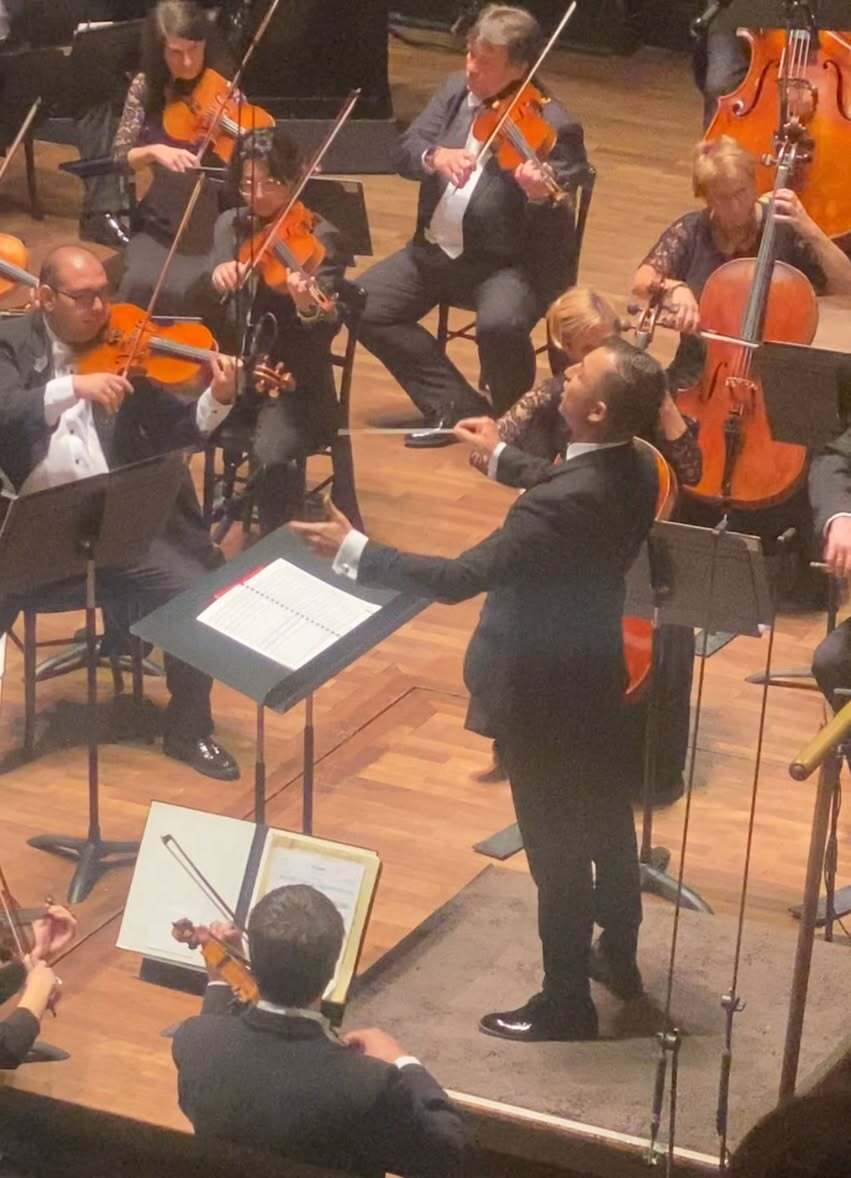




In the evening of October 14, at the Franz Liszt Academy of Music in Budapest, conducted by Robert Farkash, the event became a true celebration of sound, uniting the tradition of great European orchestras with the living dramaturgy of contemporary ensemble playing.
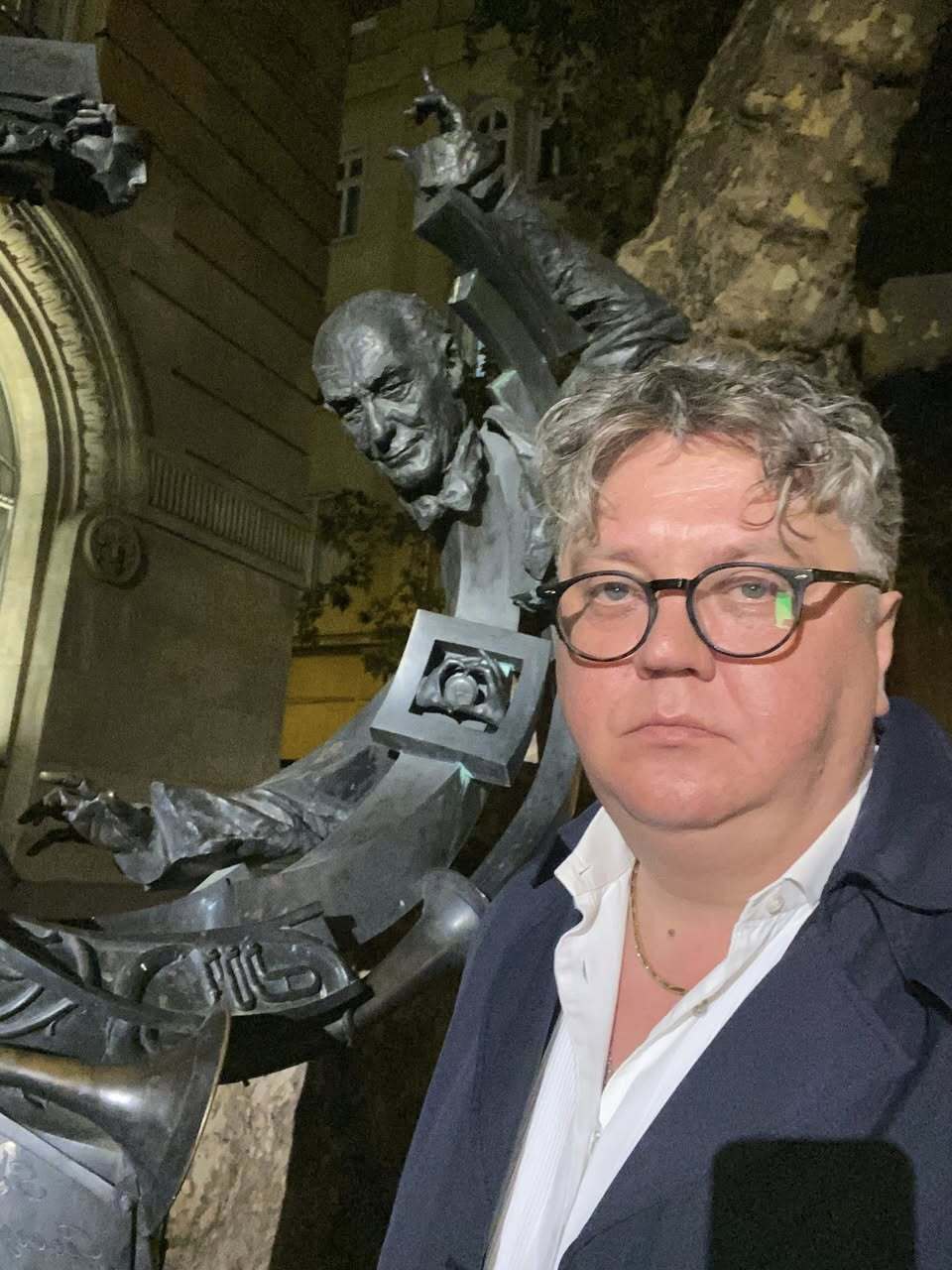
At the entrance to the hall, on the street to the right, stands the Georg Solti sculpture, installed in 2013. Solti is one of the most significant conductors of the 20th century, and his image here reminds both spectators and performers of the continuity and tradition of musical heritage: from early conservatory schools to modern interpretations. The memory of Solti in this context helps the audience feel the connection between past and present, between the ideal of performance and its real embodiment on stage.
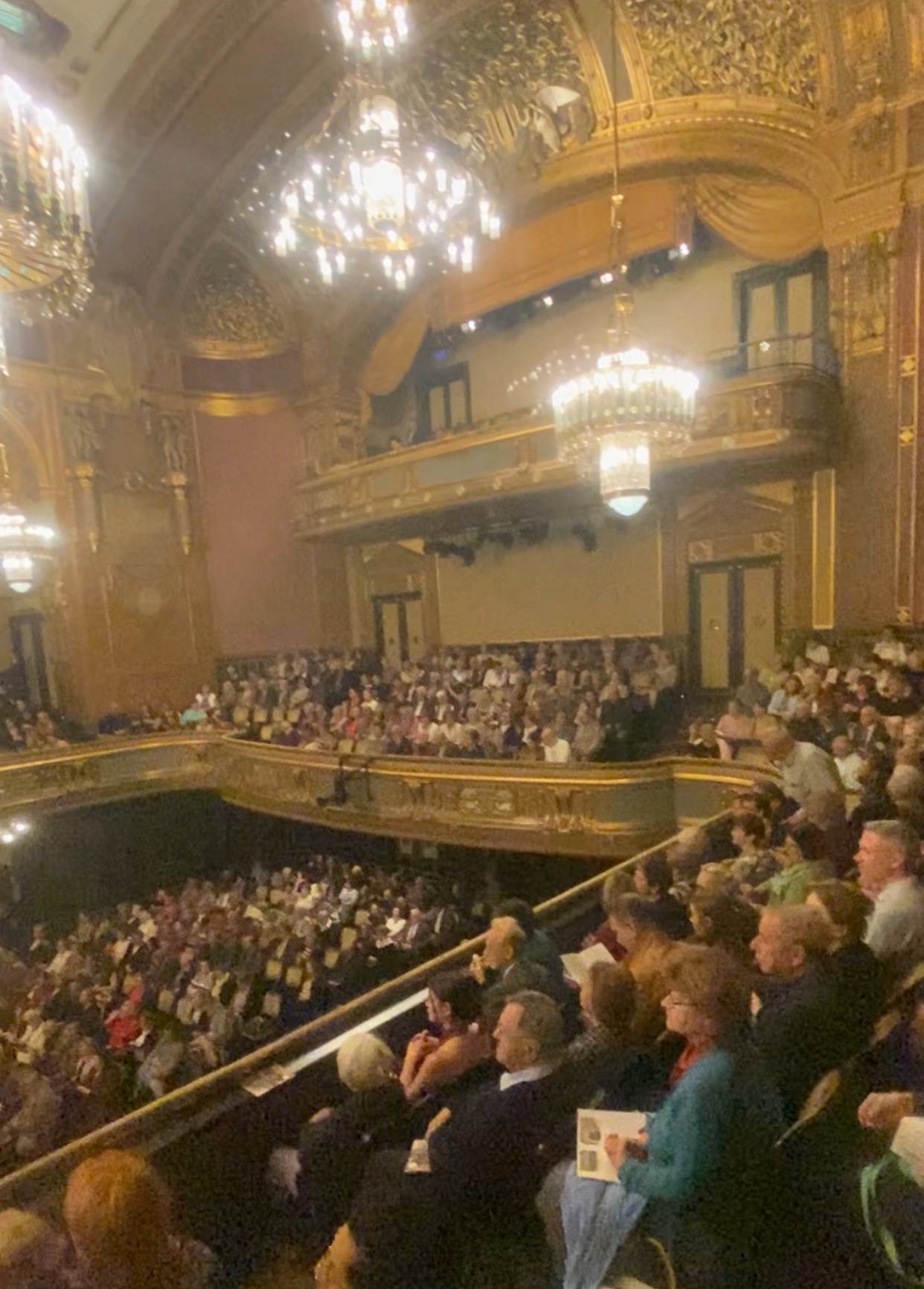
The hall possessed a distinctive atmosphere: acoustics, gilded stucco, cherubs with musical instruments, ceiling plaques with inscriptions of musical terms created the impression that time stops to listen to every nuance. In such pauses, one hears the memory of the greatest performances that took place here, and the anticipation of new stories that will be relived in future concerts.
The soloists were chosen with particular attention to the color and timbre of the ensemble. Gáspár Kelémen on violin and Barnabás Kelémen on viola offered an interpretation of Mozart with a clear aim to explore the facets of their musical writing: from Baroque inflections to later, romantically resonant lines.
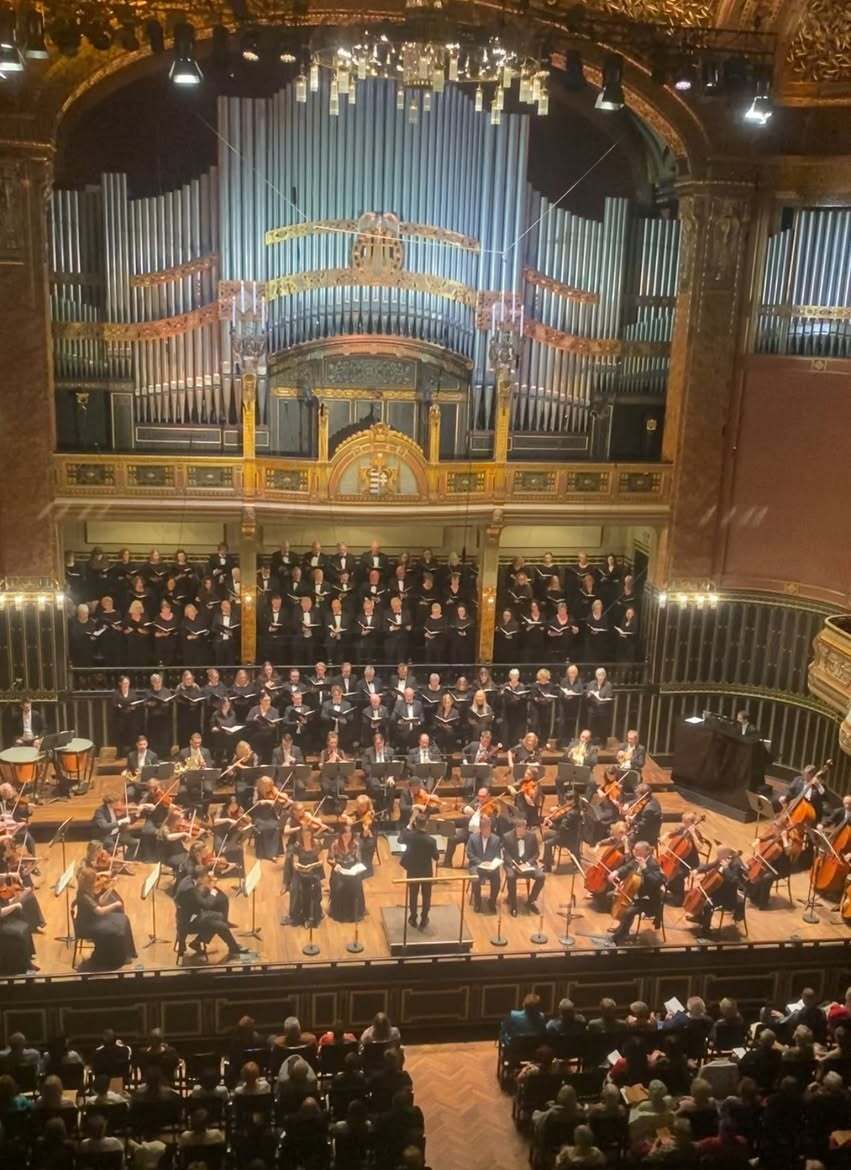
In this context, the work of the studio ensemble of singers performing Haydn stands out: soprano Idilico Megyimopetz, alto Orton Vivien, tenor Benjamin Berry, and bass Ferenc András brought a living stream of vocal colors that interacted with the orchestra and choir. With the participation of the Scottish National Choir, the concert gained additional depth, expanding the geography of musical influences and enhancing the emotional impact of the program.
The works performed that evening connected eras and styles, offering both a challenge and a gift for the listener. J. Haydn Te Deum Hob. XXIIIc:2 was presented as a solemn hymn of gratitude and praise, written within the bright and dramatically rich orchestral texture of late 18th-century Haydn. Haydn’s Te Deum is a work where the liturgical formula intersects with theatrical dynamism, where each section (a periodic release, a trumpete fanfare, a spiritually inspired string) sounds as an invitation to collective glorification and to sharing the moment. In today’s performance, this work opened the concert with expansive expressiveness, allowing the soloists and vocalists to demonstrate not only the technique of ornate vocal writing but also the orchestra’s ability to imitate and support the prayerful monologue of the choir.
Next on the program is Mozart Symphonia Concertante K.364. This is a rare but highly expressive piece for two solo instruments (here violin and viola), where the soloists do not merely perform virtuosic passages, but build a dialogue within the orchestral fabric. The interpretation by Gáspár Kelémén and Barnabás Kelémen highlighted a close affinity to Baroque performance techniques, especially regarding textural construction and the use of natural timbral shades. In their rendition, Mozart’s Sinfonietta sounded closer to a lyric and intimate outset: near-Baroque, but with a modern reading that allowed the work’s structure to be understood as dramatically constructed, voluminous, and contemplative. Paradoxically, this sound brought poetry and Romantic depth to the classical form, revealing new voices and nuances to the listener’s ear.
And the third key item on the program — Haydn Harmoniemesse Hob. XXII:14 — the Harmonymess, with orchestral support and vocal parts that emphasize the mundane and sacred beginnings of each fragment. Harmoniemesse is a sequence of light and festive movements where spirit and technique merge into a single harmony, in which soloists, choir, and orchestra are involved. In today’s performance, this piece sounded like a concert in a temple of music: monumental harmonies, solo and choral interjections requiring a high level of discipline and chamber-like concentration, where every note penetrates the hall with precise articulation and emotional charge.
Transition to the hall’s acoustic complexion is arguably one of the evening’s strongest aspects. The hall possesses superb acoustics: every instrument can be heard in any part of the hall, making even the subtlest nuances of the orchestral texture tangible to the listeners. The gilded stucco, cherubs with musical instruments, and the ceiling plaques bearing inscriptions of musical terms create not just a concert hall, but a temple of sound. This temple reinforces the impression that every performance here is not only an artistic event but also a spiritual experience conducted through music.
The Scottish National Choir opened the program — a group whose presence imparted an added force of sound and contributed a cultural layer to the overall palette of the performance. Their introduction was followed by boisterous and extended applause, signaling a high degree of appreciation and engagement from the hall. In this context, applause became part of the evening’s musical language: they expressed joy and respect, but also shaped the stage dynamics, underscoring the importance of each program segment and each performer.
Applause in classical music is an integral part of the action, connecting performers and listeners. It helps to build a dialogue between performers and audience, serves as feedback, and creates a rhythmic fabric that influences the perception of subsequent fragments. In the context of today’s concert, the rhythm of the applause was especially expressive: starting with the soloists, then the orchestra, and finally the guests — the choir — each section receiving its own “play” in the overall symphony of the hall’s response. The logic of Hungarian applause astonishes with its structural sequence, and the concert concluded with a climax of emotions, which the audience followed with a smooth and logical ending in the spirit of Andante — Accelerando — Presto, where each stage represented a move toward closure rather than merely a final ovation.
Thus, today’s concert stood as a vivid example of how one hall can unite different eras and styles through a single artistic design: from the grand hymns of Haydn to the chamber lyricism of Mozart, from the spiritual framework of Harmoniemesse to the vivid stage effects of choir and soloists. The Budapest audience, in turn, approached the evening with deep engagement and respect for the music, making applause not a chaotic reaction but a logical, well-structured rhythmic fabric subordinated to the rhythms of the music and Farkash’s conducting. In this interaction, a concert is born not merely as an event but as a space where artistry and listener become one living organism that breathes and sounds together.
At the entrance to the hall, on the street to the right, stands the Georg Solti sculpture, installed in 2013. Solti is one of the most significant conductors of the 20th century, and his image here reminds both spectators and performers of the continuity and tradition of musical heritage: from early conservatory schools to modern interpretations. The memory of Solti in this context helps the audience feel the connection between past and present, between the ideal of performance and its real embodiment on stage.
The hall possessed a distinctive atmosphere: acoustics, gilded stucco, cherubs with musical instruments, ceiling plaques with inscriptions of musical terms created the impression that time stops to listen to every nuance. In such pauses, one hears the memory of the greatest performances that took place here, and the anticipation of new stories that will be relived in future concerts.
The soloists were chosen with particular attention to the color and timbre of the ensemble. Gáspár Kelémen on violin and Barnabás Kelémen on viola offered an interpretation of Mozart with a clear aim to explore the facets of their musical writing: from Baroque inflections to later, romantically resonant lines.
In this context, the work of the studio ensemble of singers performing Haydn stands out: soprano Idilico Megyimopetz, alto Orton Vivien, tenor Benjamin Berry, and bass Ferenc András brought a living stream of vocal colors that interacted with the orchestra and choir. With the participation of the Scottish National Choir, the concert gained additional depth, expanding the geography of musical influences and enhancing the emotional impact of the program.
The works performed that evening connected eras and styles, offering both a challenge and a gift for the listener. J. Haydn Te Deum Hob. XXIIIc:2 was presented as a solemn hymn of gratitude and praise, written within the bright and dramatically rich orchestral texture of late 18th-century Haydn. Haydn’s Te Deum is a work where the liturgical formula intersects with theatrical dynamism, where each section (a periodic release, a trumpete fanfare, a spiritually inspired string) sounds as an invitation to collective glorification and to sharing the moment. In today’s performance, this work opened the concert with expansive expressiveness, allowing the soloists and vocalists to demonstrate not only the technique of ornate vocal writing but also the orchestra’s ability to imitate and support the prayerful monologue of the choir.
Next on the program is Mozart Symphonia Concertante K.364. This is a rare but highly expressive piece for two solo instruments (here violin and viola), where the soloists do not merely perform virtuosic passages, but build a dialogue within the orchestral fabric. The interpretation by Gáspár Kelémén and Barnabás Kelémen highlighted a close affinity to Baroque performance techniques, especially regarding textural construction and the use of natural timbral shades. In their rendition, Mozart’s Sinfonietta sounded closer to a lyric and intimate outset: near-Baroque, but with a modern reading that allowed the work’s structure to be understood as dramatically constructed, voluminous, and contemplative. Paradoxically, this sound brought poetry and Romantic depth to the classical form, revealing new voices and nuances to the listener’s ear.
And the third key item on the program — Haydn Harmoniemesse Hob. XXII:14 — the Harmonymess, with orchestral support and vocal parts that emphasize the mundane and sacred beginnings of each fragment. Harmoniemesse is a sequence of light and festive movements where spirit and technique merge into a single harmony, in which soloists, choir, and orchestra are involved. In today’s performance, this piece sounded like a concert in a temple of music: monumental harmonies, solo and choral interjections requiring a high level of discipline and chamber-like concentration, where every note penetrates the hall with precise articulation and emotional charge.
Transition to the hall’s acoustic complexion is arguably one of the evening’s strongest aspects. The hall possesses superb acoustics: every instrument can be heard in any part of the hall, making even the subtlest nuances of the orchestral texture tangible to the listeners. The gilded stucco, cherubs with musical instruments, and the ceiling plaques bearing inscriptions of musical terms create not just a concert hall, but a temple of sound. This temple reinforces the impression that every performance here is not only an artistic event but also a spiritual experience conducted through music.
The Scottish National Choir opened the program — a group whose presence imparted an added force of sound and contributed a cultural layer to the overall palette of the performance. Their introduction was followed by boisterous and extended applause, signaling a high degree of appreciation and engagement from the hall. In this context, applause became part of the evening’s musical language: they expressed joy and respect, but also shaped the stage dynamics, underscoring the importance of each program segment and each performer.
Applause in classical music is an integral part of the action, connecting performers and listeners. It helps to build a dialogue between performers and audience, serves as feedback, and creates a rhythmic fabric that influences the perception of subsequent fragments. In the context of today’s concert, the rhythm of the applause was especially expressive: starting with the soloists, then the orchestra, and finally the guests — the choir — each section receiving its own “play” in the overall symphony of the hall’s response. The logic of Hungarian applause astonishes with its structural sequence, and the concert concluded with a climax of emotions, which the audience followed with a smooth and logical ending in the spirit of Andante — Accelerando — Presto, where each stage represented a move toward closure rather than merely a final ovation.
Thus, today’s concert stood as a vivid example of how one hall can unite different eras and styles through a single artistic design: from the grand hymns of Haydn to the chamber lyricism of Mozart, from the spiritual framework of Harmoniemesse to the vivid stage effects of choir and soloists. The Budapest audience, in turn, approached the evening with deep engagement and respect for the music, making applause not a chaotic reaction but a logical, well-structured rhythmic fabric subordinated to the rhythms of the music and Farkash’s conducting. In this interaction, a concert is born not merely as an event but as a space where artistry and listener become one living organism that breathes and sounds together.