October 19, 2025, Budapest.
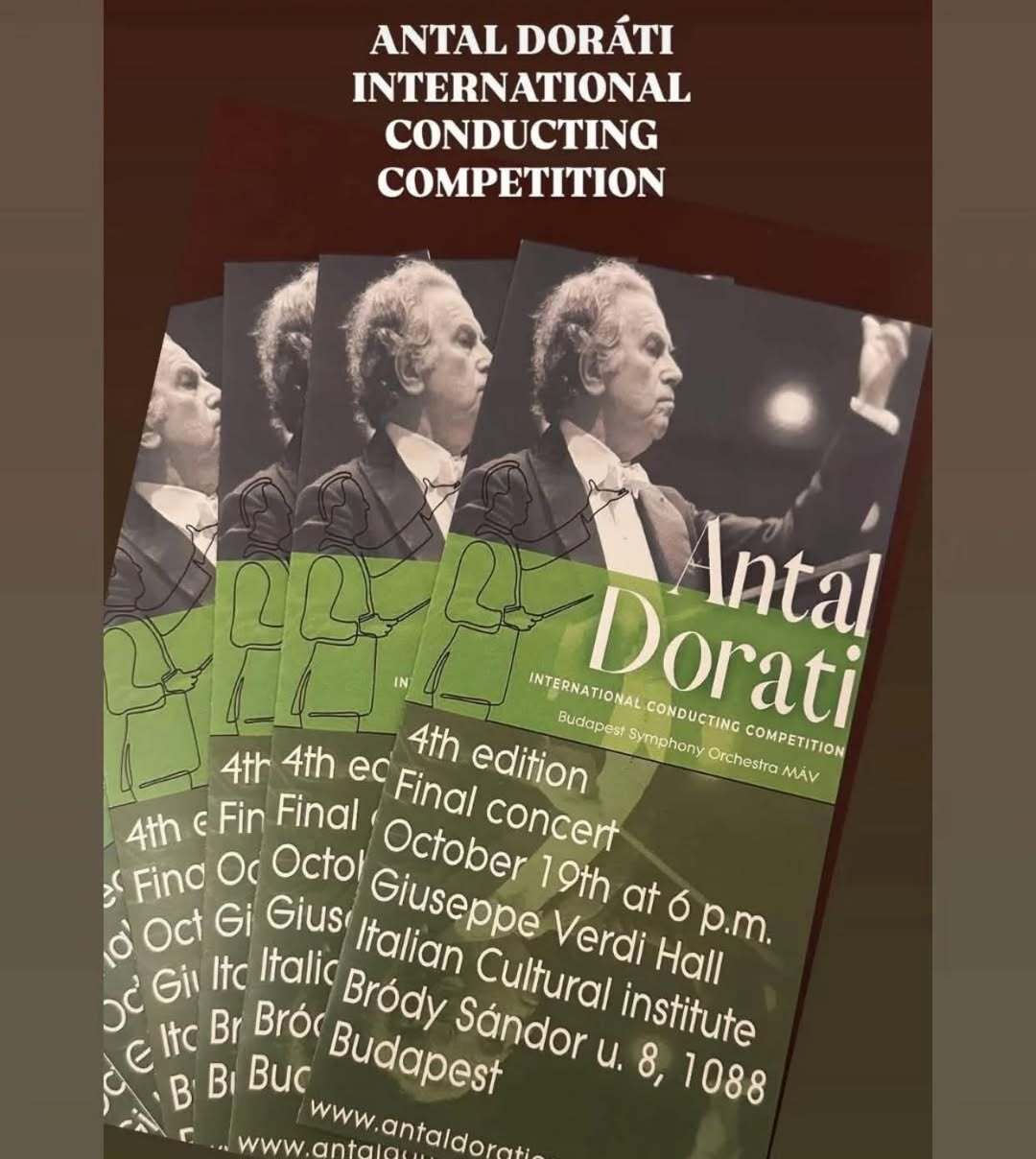
The International Antal Dorati Conducting Competition in Budapest has ended.
The curtain fell, and the stage changed its role once again—to a place for the next round of applause: a showcase of characters and great music that lives beyond plans and expectations.
The Antal Dorati Conducting Competition in Budapest, now in its fourth year and organized by the remarkable conductor and superintendent Andrea Vitello, concluded with a brilliant gala concert by the two finalists:: Luigi Mazzocchi (Italy) and Riku Okamoto (Japan), who performed their competition pieces: Riku Okamoto — Bartók Concerto for Orchestra and Peter Eötvös Per Luciano Berio; Luigi Mazzocchi — Lili Boulanger D’un matin de printemps and Mussorgsky’s Tableaux d’une Exposition.
The amazing MAV symphony orchestra played all the rounds from the first to the final. Bravo to all the musicians and soloists in the orchestra. Excellent work.
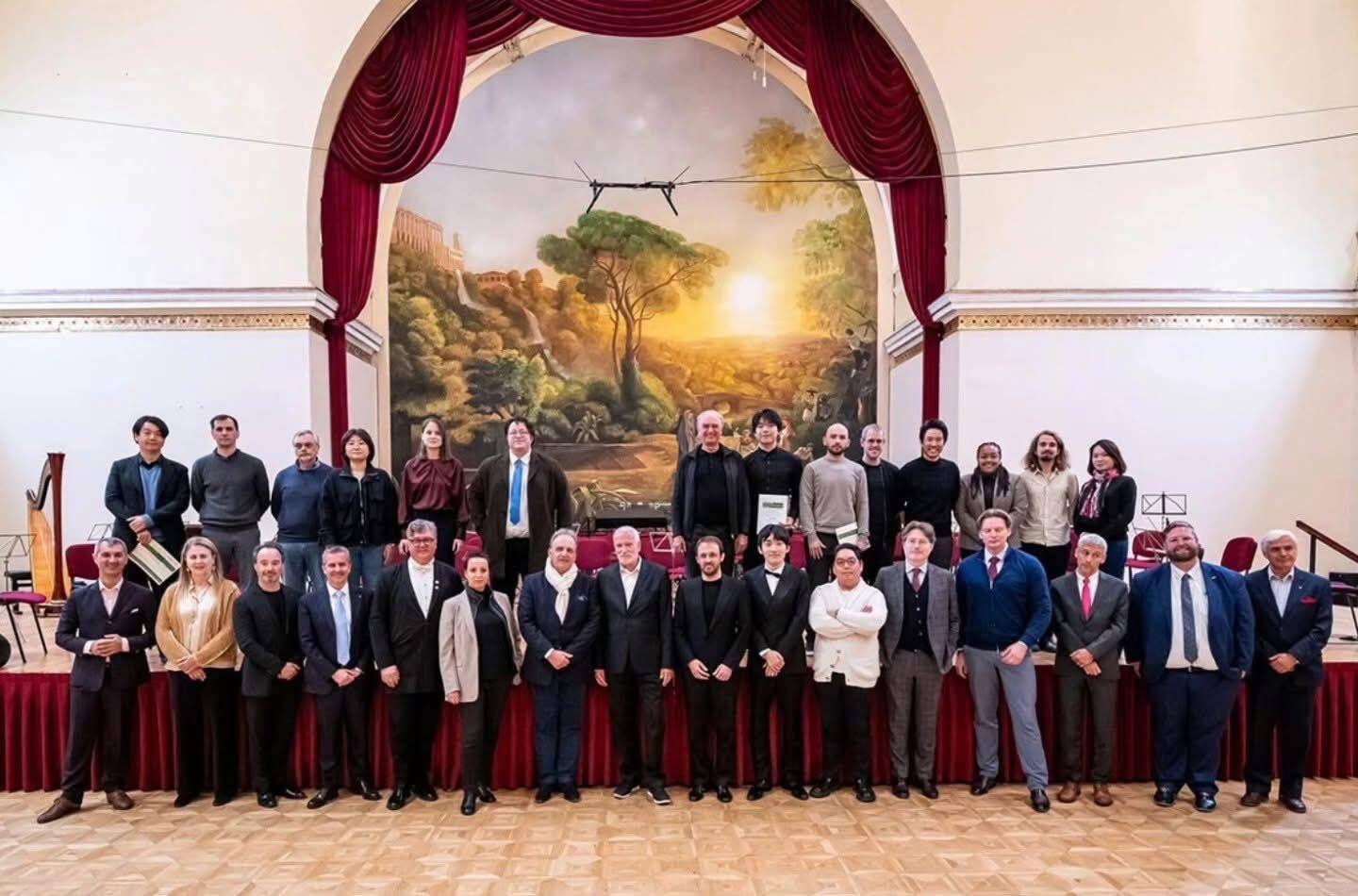
The jury, chaired by Antonello Allemendi, with participants including György G. Ráth, Benjamin Levy, Valentina Peleggi, Pierangelo Conte, Deun Lee, György Lendvai, Elisabetta Maschio, Anton Shaburov, Peter Puskás, Francesco Di Rosa, Matt Wilshire and I Taras Kutsenko, found both finalists strong in different ways. Luigi impressed during rehearsals with his bold musical ideas, but in the concert, in the view of some elder jurors, showed some restraint and tempo issues, while Riku delivered steady, reliable performances that some found too safe. Debates over rehearsal overruns, gesture styles, and scheduling reliability prevented a unanimous decision. Instead of awarding a single first prize, the panel split career-building opportunities: Luigi received three guest-conducting invitations plus a one-year management representation, and Riku received two concert invitations. This compromise aims to balance the artistic strengths of each conductor with practical considerations. Each winner received €6000.
Special prizes were also awarded: the youngest participant to reach the second round — the remarkable young conductor from China, Yang Zibo. Additionally, prizes went to representatives from Hungary (Vida Bernadett), Cuba (Ramos César), Brazil (Rodrigues Lima Daniel), Japan (Sudo Yuya).
In the Gala Hall, finalists and semifinalists, whose participation and aspirations made this event more than a list of winners—since out of 36 participants each found their own victory and resonance in the hearts of the musical community—felt that this event continues to live in rehearsal rooms, on orchestral stages, in social networks, and in the minds of young conductors.
The essence and spirit of the competition lay not only in precise performance of the score, but in the ability of a conductor to speak to the music in the language of emotion, ideas, and individuality. As discussed earlier, the criteria for success are not only technical mastery but also the ability to convey emotional depth, to create a personal image, and to convey one’s concept to the orchestra and the audience. This idea manifested itself step by step: from the first rounds to the final performance, where every gesture of the baton became not a template but a response to a specific musical situation.
Meeting with the orchestra is a theatre of trust. Participants demonstrated the importance of confident contact: posture, gaze, gestures, and a substantial amount of intonation that goes beyond words. It was not rare to see conductors learning to instantly adapt to the timbral characteristics of the ensemble and the venue to ensure unity of sound. An important topic became diction and clarity of expression — not only in terms of words but also in the musical sense they invested in every movement. After all, the conductor’s speech is a language understood by every listener, even if he does not master English perfectly.
Speaking of art and image, the contest became an arena for demonstrating how theatricality combines with the inner voice of the music. The figure of the conductor on stage ceased to be a mere technical instrument; it became a bridge between the composer’s idea and the living sound of the orchestra. Participants learned to listen not only to notes but also to the space between them: rests, silence, and sharpness that shape character of performance.
The issue of balancing academia and creativity also became prominent. In an era when technique can be flawless, the task of the modern conductor is to color the music with a personal hue without losing rhythmic clarity and precision. The competition reminded us that musical thought requires both discipline and boldness.
The winners and laureates of the competition are not merely people who received prizes; they are ambitions, ideas, and energy that will further develop the industry. Their successes remind us that a competition is a launching pad where one can consolidate achievements, explore new horizons for creativity, collaboration, and leadership in the world of symphonic music.
The importance of this event for the future musical world goes beyond acts of awarding prizes. It is a reminder that conducting is both technique and responsibility to music, to the orchestra, and to the audience. The Antal Dorati Competition in Budapest became a meeting place for ideas and people who will shape the future image of classical music: from young talents to seasoned masters seeking fresh approaches to old ideals.
Thus, the conclusion of the competition is a moment of summing up, but not the end of the story. It is a new chapter, beginning with reflection on the past and opening the road to future discoveries. May the impressions from this event inspire participants and the entire musical world: on stage there should live the sense that every gesture is a chance to change the sound, that every new look at the score is an invitation to a new alliance of music and people.
The conclusion sounds louder than words: the finale of the competition is not a point but a comma in a long musical phrase, where conductors continue to seek their voice, orchestras continue to listen to it, and the audience continues to experience with them every harmonic wave. And in this lies the strength of such events: they remind us that the future of classical music depends on the courage and imagination of those who hold the baton and lead us into unexplored musical spaces.
Congratulations to everyone on the celebration of the art of conducting.
The International Antal Dorati Conducting Competition in Budapest has ended.
The curtain fell, and the stage changed its role once again—to a place for the next round of applause: a showcase of characters and great music that lives beyond plans and expectations.
The Antal Dorati Conducting Competition in Budapest, now in its fourth year and organized by the remarkable conductor and superintendent Andrea Vitello, concluded with a brilliant gala concert by the two finalists:: Luigi Mazzocchi (Italy) and Riku Okamoto (Japan), who performed their competition pieces: Riku Okamoto — Bartók Concerto for Orchestra and Peter Eötvös Per Luciano Berio; Luigi Mazzocchi — Lili Boulanger D’un matin de printemps and Mussorgsky’s Tableaux d’une Exposition.
The amazing MAV symphony orchestra played all the rounds from the first to the final. Bravo to all the musicians and soloists in the orchestra. Excellent work.
The jury, chaired by Antonello Allemendi, with participants including György G. Ráth, Benjamin Levy, Valentina Peleggi, Pierangelo Conte, Deun Lee, György Lendvai, Elisabetta Maschio, Anton Shaburov, Peter Puskás, Francesco Di Rosa, Matt Wilshire and I Taras Kutsenko, found both finalists strong in different ways. Luigi impressed during rehearsals with his bold musical ideas, but in the concert, in the view of some elder jurors, showed some restraint and tempo issues, while Riku delivered steady, reliable performances that some found too safe. Debates over rehearsal overruns, gesture styles, and scheduling reliability prevented a unanimous decision. Instead of awarding a single first prize, the panel split career-building opportunities: Luigi received three guest-conducting invitations plus a one-year management representation, and Riku received two concert invitations. This compromise aims to balance the artistic strengths of each conductor with practical considerations. Each winner received €6000.
Special prizes were also awarded: the youngest participant to reach the second round — the remarkable young conductor from China, Yang Zibo. Additionally, prizes went to representatives from Hungary (Vida Bernadett), Cuba (Ramos César), Brazil (Rodrigues Lima Daniel), Japan (Sudo Yuya).
In the Gala Hall, finalists and semifinalists, whose participation and aspirations made this event more than a list of winners—since out of 36 participants each found their own victory and resonance in the hearts of the musical community—felt that this event continues to live in rehearsal rooms, on orchestral stages, in social networks, and in the minds of young conductors.
The essence and spirit of the competition lay not only in precise performance of the score, but in the ability of a conductor to speak to the music in the language of emotion, ideas, and individuality. As discussed earlier, the criteria for success are not only technical mastery but also the ability to convey emotional depth, to create a personal image, and to convey one’s concept to the orchestra and the audience. This idea manifested itself step by step: from the first rounds to the final performance, where every gesture of the baton became not a template but a response to a specific musical situation.
Meeting with the orchestra is a theatre of trust. Participants demonstrated the importance of confident contact: posture, gaze, gestures, and a substantial amount of intonation that goes beyond words. It was not rare to see conductors learning to instantly adapt to the timbral characteristics of the ensemble and the venue to ensure unity of sound. An important topic became diction and clarity of expression — not only in terms of words but also in the musical sense they invested in every movement. After all, the conductor’s speech is a language understood by every listener, even if he does not master English perfectly.
Speaking of art and image, the contest became an arena for demonstrating how theatricality combines with the inner voice of the music. The figure of the conductor on stage ceased to be a mere technical instrument; it became a bridge between the composer’s idea and the living sound of the orchestra. Participants learned to listen not only to notes but also to the space between them: rests, silence, and sharpness that shape character of performance.
The issue of balancing academia and creativity also became prominent. In an era when technique can be flawless, the task of the modern conductor is to color the music with a personal hue without losing rhythmic clarity and precision. The competition reminded us that musical thought requires both discipline and boldness.
The winners and laureates of the competition are not merely people who received prizes; they are ambitions, ideas, and energy that will further develop the industry. Their successes remind us that a competition is a launching pad where one can consolidate achievements, explore new horizons for creativity, collaboration, and leadership in the world of symphonic music.
The importance of this event for the future musical world goes beyond acts of awarding prizes. It is a reminder that conducting is both technique and responsibility to music, to the orchestra, and to the audience. The Antal Dorati Competition in Budapest became a meeting place for ideas and people who will shape the future image of classical music: from young talents to seasoned masters seeking fresh approaches to old ideals.
Thus, the conclusion of the competition is a moment of summing up, but not the end of the story. It is a new chapter, beginning with reflection on the past and opening the road to future discoveries. May the impressions from this event inspire participants and the entire musical world: on stage there should live the sense that every gesture is a chance to change the sound, that every new look at the score is an invitation to a new alliance of music and people.
The conclusion sounds louder than words: the finale of the competition is not a point but a comma in a long musical phrase, where conductors continue to seek their voice, orchestras continue to listen to it, and the audience continues to experience with them every harmonic wave. And in this lies the strength of such events: they remind us that the future of classical music depends on the courage and imagination of those who hold the baton and lead us into unexplored musical spaces.
Congratulations to everyone on the celebration of the art of conducting.