Author: Maxim Gorky
Director: Kirill Serebrennikov
Set designer: Nikolai Simonov
Costume designer: Olga Reznichenko
Lighting designer: Damir Ismagilov
Music director: Vladimir Pankov
Music: Pan Quartet
Arrangement: Alexei Gusev
Assistant Director: Lyubov Zabolonskaya
Duration: 3 hours 30 minutes with one intermission
Director: Kirill Serebrennikov
Set designer: Nikolai Simonov
Costume designer: Olga Reznichenko
Lighting designer: Damir Ismagilov
Music director: Vladimir Pankov
Music: Pan Quartet
Arrangement: Alexei Gusev
Assistant Director: Lyubov Zabolonskaya
Duration: 3 hours 30 minutes with one intermission
The performance as a meeting of two theaters.
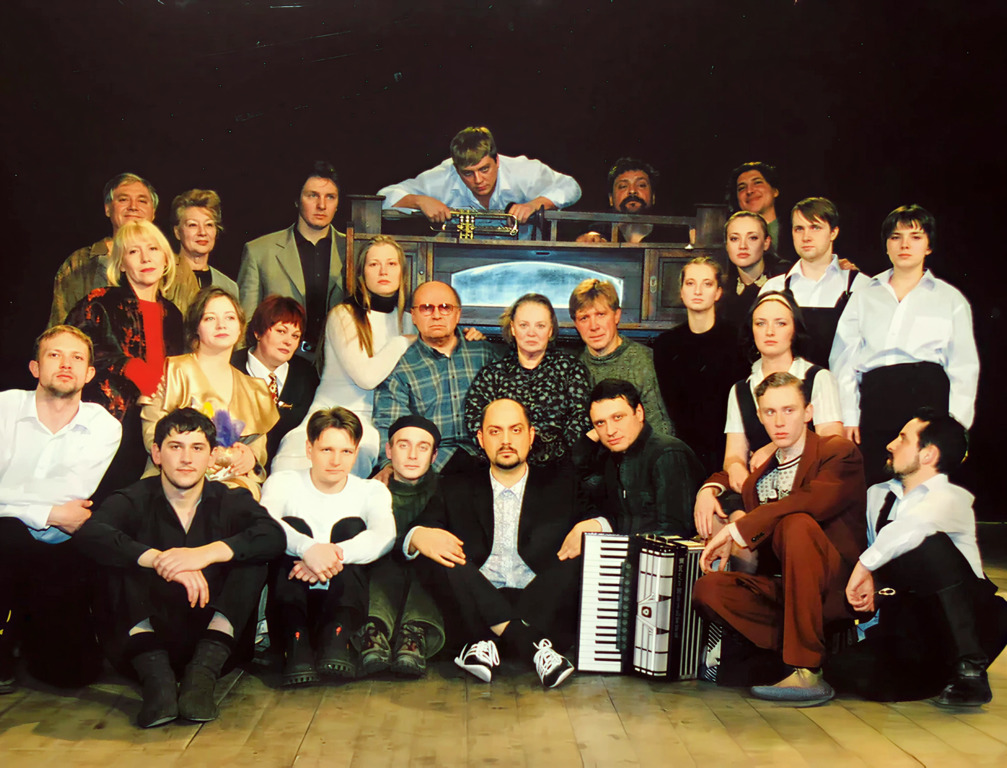
Kirill Serebrennikov's “The Philistines” is an ambitious attempt to translate Gorky into the language of contemporary avant-garde theater. At the heart of the production is the clash between two eras and two theatrical styles: the old, “masters of the stage,” and the young generation of actors and artists, united by a common dramaturgy and musical space. Serebrennikov's direction transforms the classic drama into an opera of urban decay, where the stage becomes a courtyard and the furniture becomes part of the plot and a symbol of the loss of stability.
Artistic concept: space, music, and people.
- Stage setting: the characters live in a courtyard where furniture is scattered haphazardly and chaos and discomfort reign. This visual environment sets the tone for the entire play and reflects the inner chaos of the characters.
- Music as a participant in the action: the sounds and rhythms of the Pan Quartet do not serve as background music, but become direct participants in the action. Music expands the drama, emphasizes tension, and sometimes directs the course of the scene as clearly as the characters' speech.
- The role of artistic details: the lighting designer (Damir Ismagilov) and costume designer (Olga Reznichenko) shape the image of the era and mood, complementing the feeling of “immersion” in Gorky's world through the prism of contemporary theater.
The cast and scenes.
- Key actors: Andrei Myagkov, Alla Pokrovskaya, Alexei Agapov, Kristina Babushkina, Alexei Kravchenko, Vladimir Krasnov, Ekaterina Solomatina, Evgenia Dobrovolskaya, Dmitry Nazarov, Sergei Medvedev, Yulia Chebakova, Maria Zorin, Oleg Mazurov.
- Musicians: Olga Demina, Taras Kutsenko, Sergey Rodyukov, Vladimir Nelinov, Vladimir Kudryavtsev.
- Positive aspects: a number of actors demonstrate strong stage personalities—Babushkina, Agapov, Nazarov, Dobrovolskaya, and others receive high marks for the vividness and depth of their characters. Chebakova is a notable step forward, bringing unconventionality and freshness to the performance.
- Weaknesses: Some episodes feel vague or disjointed, which sometimes prevents the audience from fully immersing themselves in the world of the performance. Some scenes remain incomprehensible without sufficient clues to their interpretation.
Interpretive contexts and criticism.
- In interviews and reviews, Serebrennikov talks about his intention to make the play an “avant-garde text” by Gorky, emphasizing the spirit of the times and generations. He sees the stage as a space for interaction between two theaters: the theater of the young and the theater of veterans, where every voice and every sound adds new meaning.
- According to critics, the production combines pronounced visual chaos with profound psychological drama. Some viewers and critics find it too complex or even controversial, while others appreciate its risk-taking and boldness.
- The question of accessibility for the audience remains open: the play is intended for those who are ready for avant-garde language and a reinterpretation of Gorky's canonical prose through contemporary theatrical practices.
Themes and motifs.
- The destruction of everyday life and the search for support: the disorder of space becomes a metaphor for the rift between the characters and their inability to understand each other.
- Communication and misunderstanding: characters often do not hear or understand each other; mutual understanding is achieved only fragmentarily, including through romantic storylines and conflicts in the second part.
- The energy of youth vs. the experience of older actors: a two-part theater in one performance allows you to see different styles of acting and interpretations of the character, from psychological realism to avant-garde expression.
- Art as a test for the theater: the production becomes an exam for the Art Theater and its audience, demonstrating how classics can be reworked and reinterpreted in the spirit of the times.
Inspiration and quotes from the director.
A number of ideas emerge from Kirill Serebrennikov's interview with Afisha:
- Theatrical staging not through dialogue with neighbors at the desk, but through dialogue with space and cultural background;
- Recognition that young actors require depth and experience, but can bring energy and freshness to the project;
- the realization that theater is not necessarily bound by box office and “scale,” but must be honest and diligent in its work on text and form;
- viewing the Moscow Art Theater as a “blank slate” on which to create a new space for theatrical discourse.
Results
Kirill Serebrennikov's production of The Philistines is an event that poses the question to the audience: can the classics speak the language of contemporary theater as convincingly as the old masters, and what place do young voices have in the great canon? The production divides the audience: some admire the boldness of the experiment and the musical dramaturgy, while others seek a clearer plot line and clarity in the director's concept. Undoubtedly, the project remains a significant contribution to contemporary theater, demonstrating Gorky's potential and Serebrennikov's fresh approach to epoch-making texts.